
Blog
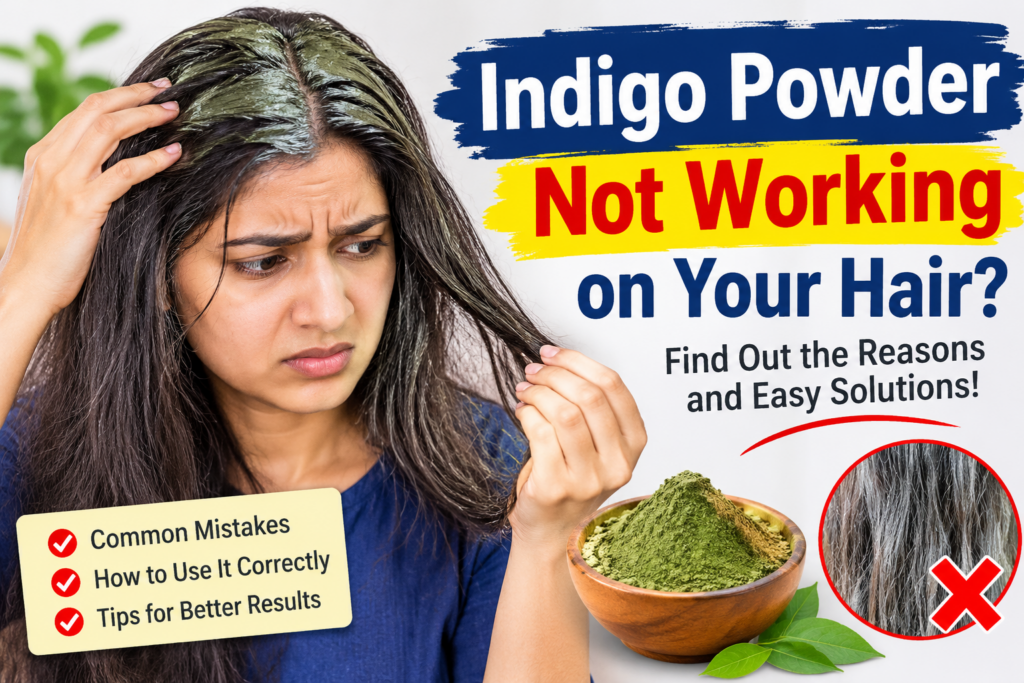
Why Is Indigo Powder Not Working on Your Hair? 7 Common Reasons and How to Fix Them
Nov
Is your hair feeling a little under the weather after dyeing? Then you need to make healthier options like switching to plant based hair dyes. Indigo is sourced from Indigofera tinctoria, which makes your hair look healthier with a rich colour. You can easily dye your hair jet black or glossy brunettes without adding any chemical to your hair.
Botanical colours can be tougher to use than conventional dyes, and often leave you wondering “why is indigo powder not working?.” So here are 7 reasons why it felt off and how to fix each one of them.
1. You Expected Indigo Alone to Produce Black Hair
Indigo has a pigment can indican which produces deep blue pigment. On its own, indigo doesn’t bind effectively to grey, white, or blonde hair, it will either slide off or produce a faint slate green colour not black.
What to do: Always pair indigo with pure henna. The dye molecule in henna binds with keratin and then you can apply indigo over it to get black hair.
For better results, follow our guide on how to mix henna and indigo powder for black and dark brown hair to understand the correct mixing process
2. Your Hair Had Product Build-Up
Plant dyes like indigo work by coating hair cuticles. If your cuticles are already filled with conditioner, styling waxes, and natural oils, then it won’t work.
What to do: Clean your hair right before colouring with a silicone free shampoo. Skip all the serums and oils, keep your hair towel damp.
3. The Paste Was Not Prepared Correctly
Henna needs to be stored for hours, so that its dye can be released, on the other hand indigo releases its dye quickly and oxidises even quicker. If you mix it in boiling water or leave it on the counter for hours, it will destroy the dye.
What to do: Mix your indigo powder in lukewarm tap water. Never leave the dye for more than 10-15 minutes, apply it immediately.
If you are new to herbal hair colouring, read our complete guide to using indigo powder for hair at home for more details on preparation
4. The Paste Was Not Applied Evenly
Indigo paste is thicker and more grainy than other dyes, if the mixture dries out or is applied in a thin layer, the dye reaction stops instantly.
What to do: You should aim for consistency of thick Greek yoghurt. Section your hair and apply generously from root to tips. Once applied, cover with a shower cap.
5. You Used an Unsuitable Application Time
Letting indigo sit for only 20 minutes will not give pigment enough time to bond, on the other hand if you leave it for too long like 4 hours, it may dry your scalp.
What to do: For a rich deep colour let indigo sit for 1-2 hours. Wrap your hair in a shower cap.
6. Your Starting Hair Colour Was Different from the Expected Result
Natural dyes don’t strip the original base colour, they mix with it to create a new colour. So if your base is light brown then a 50/50 henna-indigo mix will give you chestnut not pitch black.
What to do: You should know your natural hair colour. If you have grey or silver hair you need to follow a two step henna and indigo process.
7. The Product Was Unsuitable or Poorly Stored
Indigo powder is a botanical powder so it’s vulnerable to oxygen, moisture and sunlight. If you buy a powder that is exposed to air or diluted then it is degraded and won’t work.
What to do: Get your 100% pure lab tested indigo powder from Oils and Herbs UK. Store your pouches away from sunlight, and moisture.
Why Is Indigo Powder Turning Hair Green or Blue?
If you are worried about the bluish green shade of your hair under light then you don’t need to. This happens when you apply the powder without a red/ orange henna base. In addition to this, indigo takes some time to oxidise and darken.
What Should You Do Before Trying Again?
Before thinking of adding another layer, follow the checklist:
- Ensure that you follow the guidelines strictly even if it is as little as water temperature.
- You should also note your hair porosity, past chemical treatments, and root growth.
- You should also check whether you have covered all your greys with a copper foundation.
- Take your strand and check for revised formula first.
How Can You Choose a Suitable Indigo Powder?
You should always check the ingredient list first, it should list 100% Indigofera tinctoria leaf powder. There shouldn’t be any salts, metallic mordants or PPT.
Frequently Asked Questions
Should I apply indigo powder again immediately?
Yes. If your two-step application did not take or left faint tones, you can apply a fresh batch of indigo right away. Pure botanical indigo contains no lifting agents and will not damage your hair cuticle.
Can indigo powder work on grey hair?
Yes, but almost never on its own. Stubborn grey strands require the two-step method: a full base of pure henna first, followed immediately by pure indigo to achieve true dark brown or jet-black coverage.
Does a darker paste mean a darker hair colour?
Not necessarily. The visual colour of the paste in the bowl only reflects initial surface oxidation. What dictates your final shade is the ratio of henna to indigo, hair porosity, and proper saturation while covered.
Final Thoughts
Herbal hair colour is way more beautiful than conventional dyes but you need to understand it first. You need to find out how indigo interacts with different kinds of hair, what time it requires to settle down, and what colour it gives with henna. You can get your indigo powder or other 100% pure botanical powders from Oils and Herbs.