
Blog
Pomegranate Powder vs Pomegranate Peel Powder: What’s the Difference?
Oct
Pomegranate is often called the king of fruits when it comes to botanical nutrition. Modern kitchens are heavily dependent on pomegranate because of its antioxidants, natural pigments and celebrated heritage. However, if you are someone who has searched for more convenient ways to add this fruit into your kitchen than fresh produce, you probably know about the dilemma of choosing between pomegranate powder and pomegranate peel powder.
You may think they are the same but once you swap these two, the flavour of your recipe may change drastically. So, here is everything you may need to know, the difference, the culinary use and where to buy it.
What Is Pomegranate Powder?
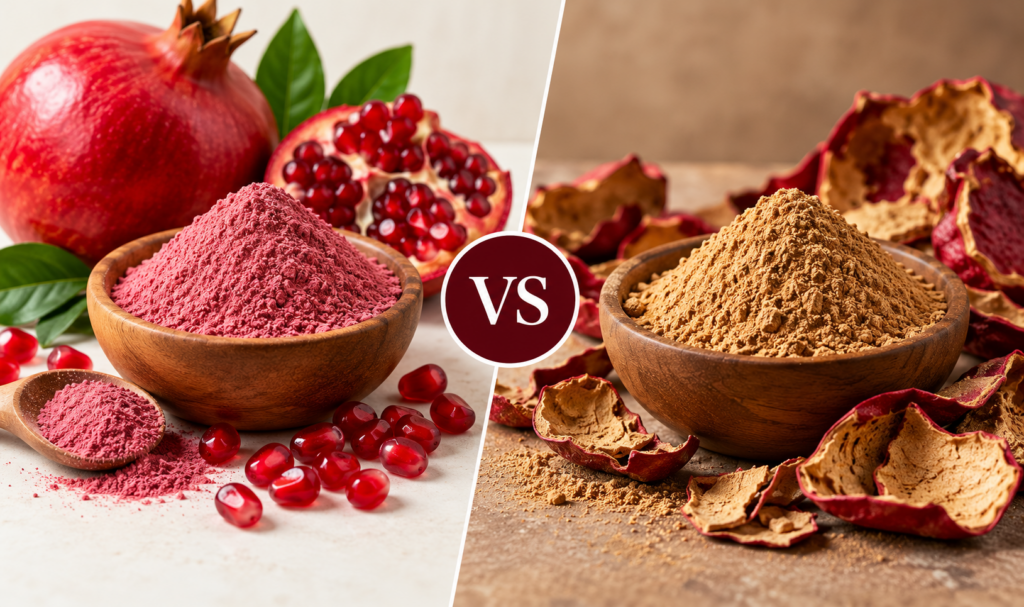
Pomegranate powder is extracted from crimson red arils of pomegranate or the juice itself by dehydrating it. The process of making this powder contains low temperature drying or freeze drying of arils before being finely milled. The gentle milling is necessary as it protects natural sugars, vitamins, fruit acids and the natural red hue. Pomegranate powder has a tarty sweet taste profile.
What Is Pomegranate Peel Powder?
On the other hand, pomegranate peel powder is produced from the outer thick leathery rind (pericarp). We often discard the peel while eating the fruit but it is of great value in herbalism and botanical formulation. These rinds are collected, washed, sun dried then finely milled to create tan-brownish powder. Because the rind has high concentration of polyphenols, and tannins, pomegranate peel powder has a remarkably bitter, dry and astringent profile.
Pomegranate Powder vs Pomegranate Peel Powder
| Feature | Pomegranate Powder | Pomegranate Peel Powder |
| Main source | Arils or juice | Dried pomegranate peel (rind/pericarp) |
| Flavour | Fruity, tart, and mildly sweet | bitter, earthy, and astringent |
| Texture | Usually fine and smooth; dissolves readily | Usually fine and is fibrous or grainy |
| Common use | Drinks, desserts, yoghurt, glazes, and cooking | Botanical brews, and topical preparations |
| Taste intensity | Generally fruit-forward and refreshing | More pronounced, bitter, and drying on the palate |
| Best suited to | Recipes where a bright pomegranate flavour is wanted | Recipes or formulations where peel is specifically intended |
Are They Interchangeable?
No, they are not used interchangeably in any recipe.
If you swap pomegranate powder with pomegranate peel powder in any of your meals be it your morning oat meal, smoothie bowl or even your cake frosting it would make it taste extremely bitter. Similarly you can’t keep fruit where rind is meant to be in herbal decoctions or in beauty masks.
Each powder has its own specific use which gives you the specified result you want.
Which Powder Should You Choose?
What you choose ultimately comes down to what you would be using it for.
Choose pomegranate powder if:
- You want to add tarty taste to your morning oatmeals, protein shakes or chia puddings.
- You are creating macaroon shells, glazes, sauces that require pomegranate tang.
- You need to add natural pinkish hue to your confectionery or culinary dusting.
- You are looking forward to replacing fresh pomegranate seeds or juice for daily culinary use.
Choose Pomegranate Peel Powder if:
- You want to make traditional herbal preparation or look to use it to prepare tonics.
- You are mixing specialty teas or making infusions where a bold, astringent bite is required.
- You are looking for an ingredient specially useful for making DIY herbal skin scrubs or clarifying face masks, or natural hair rinses.
- Your recipe specifically lists use of dried pomegranate peel.
How to Store Pomegranate Powders?
Both powders need safe storage away from direct sunlight, moisture, and heat. As fruit powder is rich in natural sugars they are more prone to clumping than others.
- Airtight containers: You should always seal the jar tightly or transfer the contents to an air tight container.
- Cool, Dark Environment: Store these air tight containers in a cool pantry, cupboard, or larder that is away from steam sources like kettles and stoves.
- Dry Utensils Only: you should never use a damp or wet spoon to take out the powder, as trapped moisture can also cause clumping.
Can You Use Pomegranate Peel Powder in Drinks?
Yes, you can easily use pomegranate peel powder in your beverages if you keep its astringent quality in check:
- Herbal Infusion and Teas: You can simmer the powder along with ginger, cinnamon and cloves. Then strain and enjoy.
- Balancing Bitterness: You can add a dash of honey, maple syrup or lemon juice in it.
- Micro dosing: If you really want to add it to smoothies, you can control the amount ( only ¼ teaspoon) in very sweet fruits like Banana, or dates to get a bitter bite.
Conclusion
While these two powders are made from the same fruit the sources are different so is the taste. Pomegranate powder is your go to kitchen staple for a tangy, fruit flavored taste. On the other hand, pomegranate peel powder is more suited for herbal brews, and tonics.
You can explore more such premium botanical powders from Oils and Herbs UK and get a suitable addition to your wellness routine.
Frequently Asked Questions
Is pomegranate powder the same as pomegranate peel powder?
No. Pomegranate powder is made from the sweet-tart arils, seeds, or juice of the fruit, whereas pomegranate peel powder is made strictly from the dried, bitter outer rind (pericarp).
Does pomegranate peel powder taste bitter?
Yes. Due to high concentrations of natural polyphenols and tannins, pomegranate peel powder has a dry, distinctly bitter, and astringent taste profile with no natural fruit sweetness.
Can pomegranate powder be used in baking?
Yes. Pomegranate powder works well in baking. You can incorporate it into muffin batters, cookie doughs, glazes, frostings, and tart fillings to add a subtle fruity tang and light natural colour.
Which one is better for smoothies?
Pomegranate powder (derived from the fruit/arils) is far better suited for smoothies because it adds a pleasant sweet-tart flavour. Pomegranate peel powder will make smoothies unpalatably bitter unless added in minute amounts with strong natural sweeteners.
How do I know which pomegranate powder I am buying?
Always check the ingredient list on the label. A true fruit powder will list “pomegranate fruit juice”, “pomegranate arils”, or “whole fruit solids”. A peel powder will specifically state “pomegranate peel”, “pomegranate rind”, or “pericarp powder”.